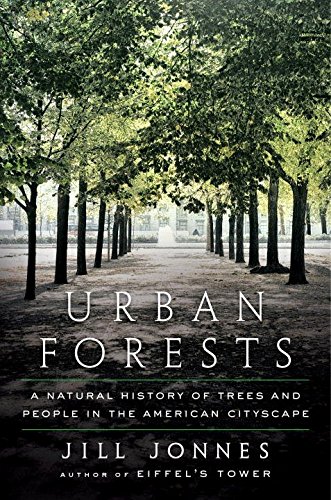
Urban Forests: A Natural History of Trees and People in the American Cityscape by Jill Jonnes

Urban Forests: A Natural History of Trees and People in the American Cityscape

Jill Jonnes
416 pages
Viking
Sep 2016
Outdoors & Nature WSBN
1
Readers
0
Reviews
0
Discussions
0
Quotes

Free account. We’ll keep this book ready while you join.

Find a copy

Formats and availability vary by store. As an Amazon Associate I earn from qualifying purchases.

<b>A celebration of urban trees and the Americans - presidents, plant explorers, visionaries, citizen activists, scientists, nurserymen, and tree nerds - whose arboreal passions have shaped and ornamented the nation's cities, from Jefferson's day to the present</b><br> <b> </b><br> Nature's largest and longest-lived creations, trees play an extraordinarily important role in our cityscapes, living landmarks that define space, cool the air, soothe our psyches, and connect us to nature and our past. Today, four fifths of Americans live in or near cities, surrounded by millions of trees, urban forests containing hundreds of species. Despite the ubiquity and familiarity of those trees, most of us take them for granted and know little of their specific natural history or civic virtues.<br> <br> Jill Jonnes's <i>Urban Forests</i> is a passionate, wide-ranging, and fascinating natural history of the tree in American cities over the course of the past two centuries. Jonnes's survey ranges from early sponsors for the Urban Tree Movement to the fascinating stories of particular species (including Washington, DC's famed cherry trees, and the American chestnut and elm, and the diseases that almost destroyed them) to the institution of Arbor Day to the most recent generation of tree evangelists who are identifying the best species to populate our cities' leafy canopies. The book examines such questions as the character of American urban forests and the effect that tree-rich landscaping might have on commerce, crime, and human well-being. As we wrestle with how to repair the damage we have wrought on nature and how to slow climate change, urban forests offer an obvious, low-tech solution. (In 2006, U.S. Forest Service scientist Greg McPherson and his colleagues calculated that New York City's 592,000 street trees annually saved $28 million in energy costs through shading and cooling, or $47.63 per tree.)
Join the conversation

No discussions yet. Join BookLovers to start a discussion about this book!

No reviews yet. Join BookLovers to write the first review!

No quotes shared yet. Join BookLovers to share your favorite quotes!

Earn Points
Your voice matters. Every comment, review, and quote earns you reward points redeemable for Bitcoin.
Comment +5 pts Review +20 pts Quote +7 pts Upvote +1 pt
Similar Books
Find books similar to this one
About this book
Pages 416
Publisher Viking
Published 2016
Readers 1