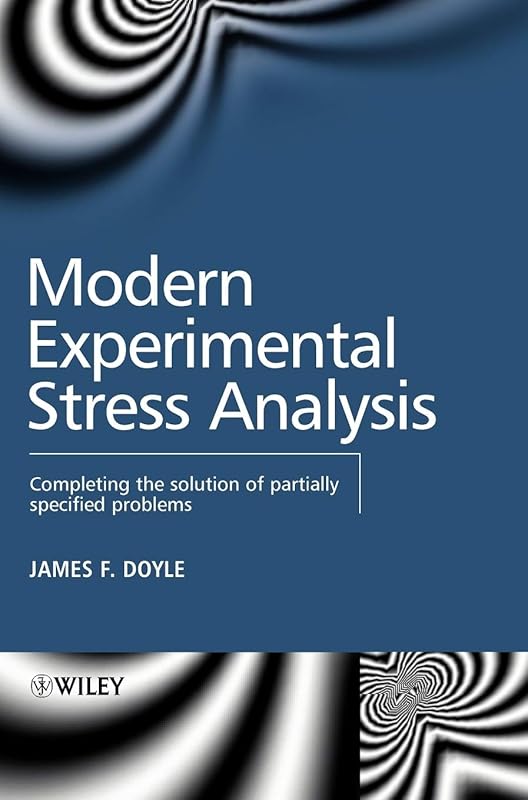
Modern Experimental Stress Analysis: Completing the Solution of Partially Specified Problems by James F. Doyle

Modern Experimental Stress Analysis: Completing the Solution of Partially Specified Problems

James F. Doyle
440 pages
Wiley
Mar 2004
Hardcover
Outdoors & Nature WSBN
0
Readers
0
Reviews
0
Discussions
0
Quotes
All structures suffer from stresses and strains caused by factors such as wind loading and vibrations. Stress analysis and measurement is an integral part of the design and management of structures, and is used in a wide range of engineering areas. There are two main types of stress analyses - the first is conceptual where the structure does not yet exist and the analyst has more freedom to define geometry, materials, loads etc - generally such analysis is undertaken using numerical methods such as the finite element method. The second is where the structure (or a prototype) exists, and so some parameters are known. Others though, such as wind loading or environmental conditions will not be completely known and yet may profoundly affect the structure. These problems are generally handled by an ad hoc combination of experimental and analytical methods.This book therefore tackles one of the most common challenges facing engineers - how to solve a stress analysis problem when all of the required information is not available. Its central concern is to establish formal methods for including measurements as part of the complete analysis of such problems by presenting a new approach to the processing of experimental data and thus to experimentation itself. In addition, engineers using finite element methods will be able to extend the range of problems they can solve (and thereby the range of applications they can address) using the methods developed here.Modern Experimental Stress Analysis:Presents a comprehensive and modern reformulation of the approach to processing experimental dataOffers a large collection of problems ranging from static to dynamic, linear to non-linearCovers stress analysis with the finite element methodIncludes a wealth of documented experimental examplesProvides new ideas for researchers in computational mechanics
Join the conversation

No discussions yet. Join BookLovers to start a discussion about this book!

No reviews yet. Join BookLovers to write the first review!

No quotes shared yet. Join BookLovers to share your favorite quotes!

Earn Points
Your voice matters. Every comment, review, and quote earns you reward points redeemable for Bitcoin.
Comment +5 pts Review +20 pts Quote +7 pts Upvote +1 pt
BookMatch Quiz
Find books similar to this one
About this book
Pages 440
Publisher Wiley
Published 2004
Readers 0