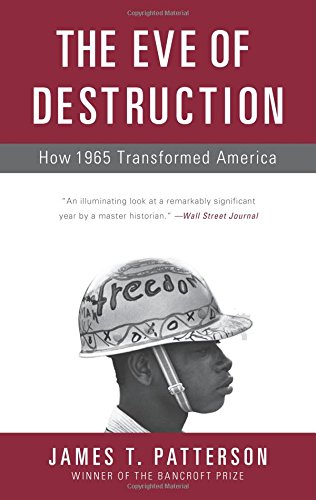
At the beginning of 1965, the U.S. seemed on the cusp of a golden age. Although Americans had been shocked by the assassination in 1963 of President Kennedy, they exuded a sense of consensus and optimism that showed no signs of abating. Indeed, political liberalism and interracial civil rights activism made it appear as if 1965 would find America more progressive and unified than it had ever been before. In January 1965, President Lyndon Johnson proclaimed that the country had “no irreconcilable conflicts.”Johnson, who was an extraordinarily skillful manager of Congress, succeeded in securing an avalanche of Great Society legislation in 1965, including Medicare, immigration reform, and a powerful Voting Rights Act. But as esteemed historian James T.