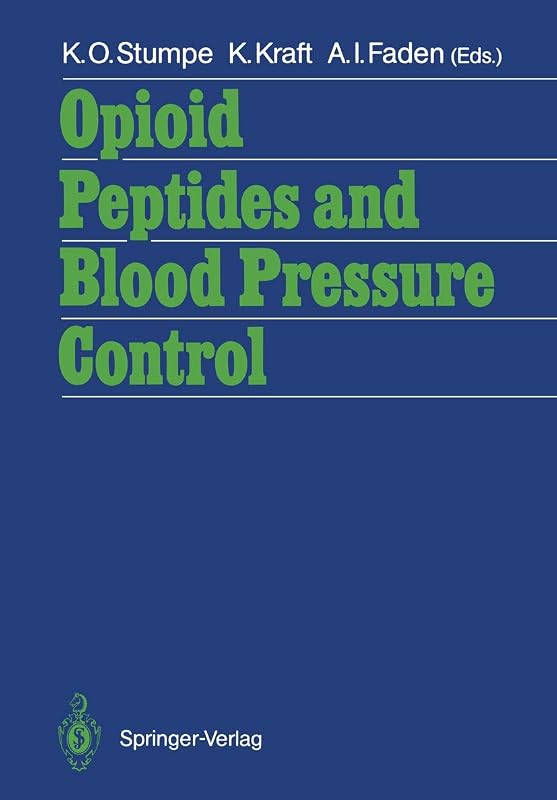
Opioid Peptides and Blood Pressure Control: 11th Scientific Meeting of the International Society of Hypertension Satellite Symposium · Bonn · September 6–7, 1986 by K.O. Stumpe

Opioid Peptides and Blood Pressure Control: 11th Scientific Meeting of the International Society of Hypertension Satellite Symposium · Bonn · September 6–7, 1986

K.O. Stumpe
308 pages
Springer
Jun 1988
Paperback
Health, Mind & Body WSBN
0
Readers
0
Reviews
0
Discussions
0
Quotes

Free account. We’ll keep this book ready while you join.

Find a copy

Formats and availability vary by store. As an Amazon Associate I earn from qualifying purchases.

A. !, FADEN, K. KRAFr, and K. O. STUMPE Following the discovery of the pentapeptide enkephalins in 1975, a number of endogenous opioid peptides and opiate receptors have been identified. Endogenous opioids and opiate-receptor mechanisms have been implicated in a variety of regulat- ory and dysregulatory functions including analgesia, cardiovascular regulation, shock, hypertension, traumatic spinal cord and brain injury, stroke, immune func- tion, feeding behavior, diuresis, gastrointestinal motility, and respiratory control, among others. Over the past 10 years, many studies have demonstrated a relationship between endogenous opioids and the cardiovascular system under both homeostatic and pathophysiological conditions. Opioids and opiate receptors have been found in various cardioregulatory sites within the brain and spinal cord, as well as in peripheral tissues such as sympathetic ganglia, adrenal gland, and heart. Both endogenous opioids and exogenous opiates have been shown to produce potent cardiovascular effects following central nervous system or systemic administration. Opiate-receptor antagonists have been demonstrated to reverse hypotension from sepsis, hypo- volemia, and anaphylaxis; such studies have been used to infer activity of endogenous opioid systems in shock. Changes in tissue concentrations of endogenous opioids and! or opiate receptors have been found after shock and hypertension, further implying a role for opioid systems in the etiology of these conditions. In addition, modification of opiate receptor regulation, receptor binding, or opioid metabolism has also been used to establish a potential role for endogenous opioid systems in cardiovascular control and dyscontrol.
Join the conversation

No discussions yet. Join BookLovers to start a discussion about this book!

No reviews yet. Join BookLovers to write the first review!

No quotes shared yet. Join BookLovers to share your favorite quotes!

Earn Points
Your voice matters. Every comment, review, and quote earns you reward points redeemable for Bitcoin.
Comment +5 pts Review +20 pts Quote +7 pts Upvote +1 pt
Similar Books
Find books similar to this one
About this book
Pages 308
Publisher Springer
Published 1988
Readers 0