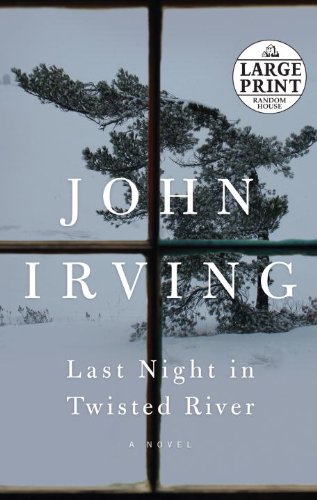
In 1954, in the cookhouse of a logging and sawmill settlement in northern New Hampshire, an anxious twelve-year-old boy mistakes the local constable's girlfriend for a bear. Both the twelve-year-old and his father become fugitives, forced to run from Coos County-to Boston, to southern Vermont, to Toronto-pursued by the implacable constable. Their lone protector is a fiercely libertarian logger, once a river driver, who befriends them.<br><br>In a story spanning five decades, <b>Last Night in Twisted River</b>-John Irving's twelfth novel-depicts the recent half-century in the United States as "a living replica of Coos County, where lethal hatreds were generally permitted to run their course." From the novel's taut opening sentence-"The young Canadian, who could not have been more than fifteen, had hesitated too long"-to its elegiac final chapter, <b>Last Night in Twisted River</b> is written with the historical authenticity and emotional authority of <b>The Cider House Rules</b> and A <b>Prayer for Owen Meany.</b> It is also as violent and disturbing a story as John Irving's breakthrough bestseller, <b>The World According to Garp.</b><br><br>What further distinguishes <b>Last Night in Twisted River</b> is the author's unmistakable voice-the inimitable voice of an accomplished storyteller. Near the end of this moving novel, John Irving writes: "We don't always have a choice how we get to know one another. Sometimes, people fall into our lives cleanly-as if out of the sky, or as if there were a direct flight from Heaven to Earth-the same sudden way we lose people, who once seemed they would always be part of our lives."<br><br><br><i>From the Hardcover edition.</i>