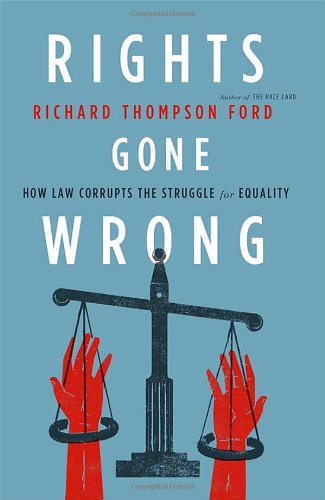
A New York Times Notable Book for Since the s ideas developed during the civil rights movement have been astonishingly successful in fighting overt discriminashytion and prejudice But how successful are they at combating the whole spectrum of social injusticeincluding conditions that arent directly caused by bigotry How do they stand up to segregation for instancea legacy of racism but not the direct result of ongoing discriminashytion Its tempting to believe that civil rights litigation can combat these social ills as efficiently as it has fought blatant discrimination In Rights Gone Wrong Richard Thompson Ford author of the New York Times Notable Book The Race Card argues that this is seldom the case Civil rights do too much and not enough opportunists use them to get a competitive edge in schools and job markets while special-interest groups use them to demand special privileges Extremists on both the left and the right have hijacked civil rights for personal advantage Worst of all their theatrics have drawn attention away from more serishyous social injustices Ford a professor of law at Stanford University shows us the many ways in which civil rights can go terribly wrong He examines newsworthy lawsuits with shrewdness and humor proving that the distinction between civil rights and personal entitlements is often anything but clear Finally he reveals how many of todays social injustices actually cant be remedied by civil rights law and demands more creative and nuanced solutions In order to live up to the legacy of the civil rights movement we must renew our commitment to civil rights and move beyond them.