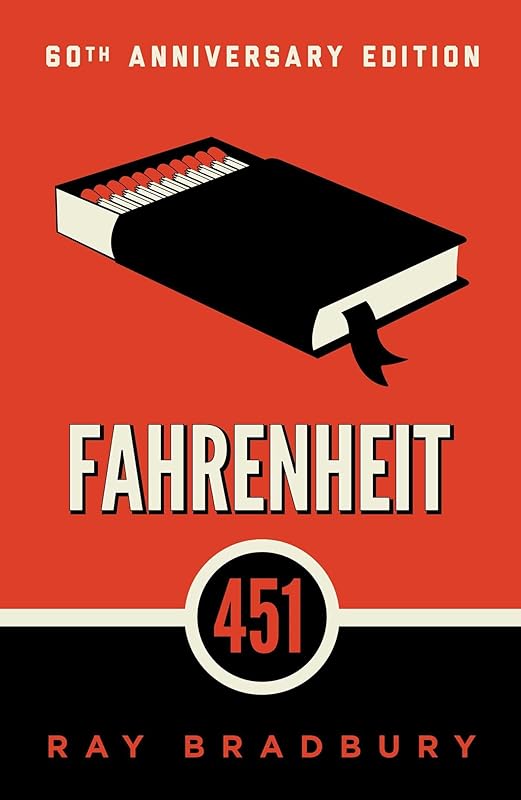

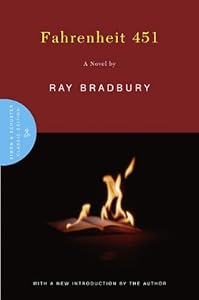
Fahrenheit 451 by Ray Bradbury

Fahrenheit 451

Ray Bradbury
249 pages
Simon & Schuster
Jan 2012
Paperback
All Fiction WSBN
3
Readers
1
Reviews
0
Discussions
0
Quotes
Nearly seventy years after its original publication, Ray Bradbury's internationally acclaimed novel Fahrenheit 451 stands as a classic of world literature set in a bleak, dystopian future. Today its message has grown more relevant than ever before.. Guy Montag is a fireman. His job is to destroy the most illegal of commodities, the printed book, along with the houses in which they are hidden. Montag never questions the destruction and ruin his actions produce, returning each day to his bland life and wife, Mildred, who spends all day with her television "family." But when he meets an eccentric young neighbor, Clarisse, who introduces him to a past where people didn't live in fear and to a present where one sees the world through the ideas in books instead of the mindless chatter of television, Montag begins to question everything he has ever known.

No discussions yet. Join BookLovers to start a discussion about this book!

URGENT NOTICE: Go on a media fast for a few hours to read this book!

I rarely read fiction, but I'm glad I read this book! It's the work of a man who truly loves books. He brings to light people who are willing to die for the right to read. Because this is a scholarly classic, much as been said about the mechanical dog, the smokers who show up to do a blood transfusion, and the job of firemen morphing into setting fires rather than extinguishing them. All of these are elements that make the book quite intriguing. I was both troubled and relieved when Montag set Beatty afire. It seems that it was the best thing to do at the time. One reason I avoid fiction is that I don't like to go through such slaughters, but it's all just an illusion. And it was an appropriate way to take out a bully. Decades ago Bradbury was able to foresee that many would steer away from reading, instead choosing the easier path of sitting back and watching big TV screens allowing anything to take over their thinking. It's disturbing to see the scholars who walk the outskirts of the cities, homeless because the authorities have banished the readers. Those devoted to exercising their freedom, and helping others to learn the skill of freedom of thought are outcast. One of the most interesting aspects of this novel is its author, Ray Bradbury, who received his education in the libraries. He loved hanging out in the library. It was a safe-haven for him in a time of economic depression in the country. This is where he got his education, among the stacks and in the pages of the books. This says a lot for how one can get an education. The library is one big school that any literate person can dive into, assuming he has one he can access. This book is definitely a demonstration of the power of libraries. The word "library" is only mentioned a few times in the book, and each time it's in reference to personal libraries in people's homes. We can assume all the public libraries had already been destroyed by the time we show up in the sidelines of this story. It's useful ...

No quotes shared yet. Join BookLovers to share your favorite quotes!