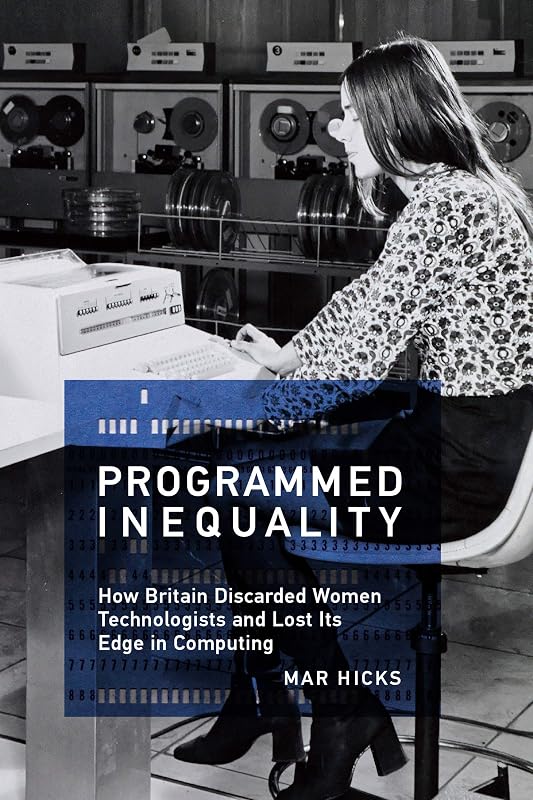
Programmed Inequality: How Britain Discarded Women Technologists and Lost Its Edge in Computing (History of Computing) by Mar Hicks

Programmed Inequality: How Britain Discarded Women Technologists and Lost Its Edge in Computing (History of Computing)

Mar Hicks
457 pages
The MIT Press
Feb 2017
Hardcover
History WSBN
0
Readers
0
Reviews
0
Discussions
0
Quotes
This "sobering tale of the real consequences of gender bias" explores how Britain lost its early dominance in computing by systematically discriminating against its most qualified workers: women (Harvard Magazine) In 1944, Britain led the world in electronic computing. By 1974, the British computer industry was all but extinct. What happened in the intervening thirty years holds lessons for all postindustrial superpowers. As Britain struggled to use technology to retain its global power, the nation's inability to manage its technical labor force hobbled its transition into the information age. In Programmed Inequality, Mar Hicks explores the story of labor feminization and gendered technocracy that undercut British efforts to computerize. That failure sprang from the government's systematic neglect of its largest trained technical workforce simply because they were women. Women were a hidden engine of growth in high technology from World War II to the 1960s. As computing experienced a gender flip, becoming male-identified in the 1960s and 1970s, labor problems grew into structural ones and gender discrimination caused the nation's largest computer user - the civil service and sprawling public sector - to make decisions that were disastrous for the British computer industry and the nation as a whole. Drawing on recently opened government files, personal interviews, and the archives of major British computer companies, Programmed Inequality takes aim at the fiction of technological meritocracy. Hicks explains why, even today, possessing technical skill is not enough to ensure that women will rise to the top in science and technology fields. Programmed Inequality shows how the disappearance of women from the field had grave macroeconomic consequences for Britain, and why the United States risks repeating those errors in the twenty-first century.
Join the conversation

No discussions yet. Join BookLovers to start a discussion about this book!

No reviews yet. Join BookLovers to write the first review!

No quotes shared yet. Join BookLovers to share your favorite quotes!

Earn Points
Your voice matters. Every comment, review, and quote earns you reward points redeemable for Bitcoin.
Comment +5 pts Review +20 pts Quote +7 pts Upvote +1 pt
BookMatch Quiz
Find books similar to this one
About this book
Pages 457
Publisher The MIT Press
Published 2017
Readers 0