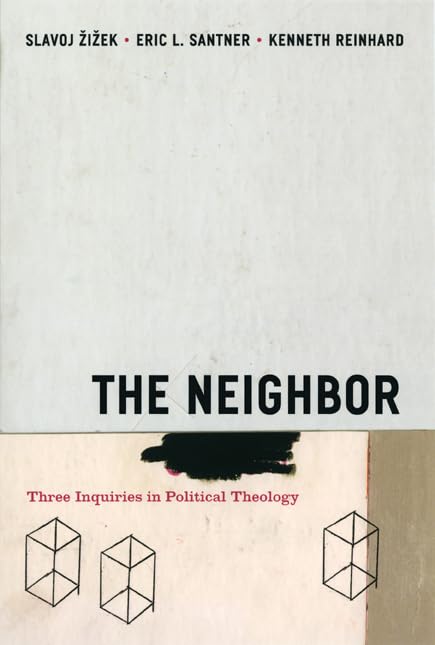
The Neighbor: Three Inquiries in Political Theology (Religion and Postmodernism) by Slavoj Žižek

The Neighbor: Three Inquiries in Political Theology (Religion and Postmodernism)

Slavoj Žižek
240 pages
University of Chicago Press
Feb 2006
Hardcover
Self-Help WSBN
0
Readers
0
Reviews
0
Discussions
0
Quotes
In Civilization and Its Discontents, Freud made abundantly clear what he thought about the biblical injunction, first articulated in Leviticus 19:18 and then elaborated in Christian teachings, to love one's neighbor as oneself. "Let us adopt a naive attitude towards it," he proposed, "as though we were hearing it for the first time; we shall be unable then to suppress a feeling of surprise and bewilderment." After the horrors of World War II, the Holocaust, Stalinism, and Yugoslavia, Leviticus 19:18 seems even less conceivable - but all the more urgent now - than Freud imagined. In The Neighbor, three of the most significant intellectuals working in psychoanalysis and critical theory collaborate to show how this problem of neighbor-love opens questions that are fundamental to ethical inquiry and that suggest a new theological configuration of political theory. Their three extended essays explore today's central historical problem: the persistence of the theological in the political. In "Towards a Political Theology of the Neighbor," Kenneth Reinhard supplements Carl Schmitt's political theology of the enemy and friend with a political theology of the neighbor based in psychoanalysis. In "Miracles Happen," Eric L. Santner extends the book's exploration of neighbor-love through a bracing reassessment of Benjamin and Rosenzweig. And in an impassioned plea for ethical violence, Slavoj Žižek's "Neighbors and Other Monsters" reconsiders the idea of excess to rehabilitate a positive sense of the inhuman and challenge the influence of Levinas on contemporary ethical thought. A rich and suggestive account of the interplay between love and hate, self and other, personal and political, The Neighbor will prove to be a touchstone across the humanities and a crucial text for understanding the persistence of political theology in secular modernity.

No discussions yet. Join BookLovers to start a discussion about this book!

No reviews yet. Join BookLovers to write the first review!

No quotes shared yet. Join BookLovers to share your favorite quotes!