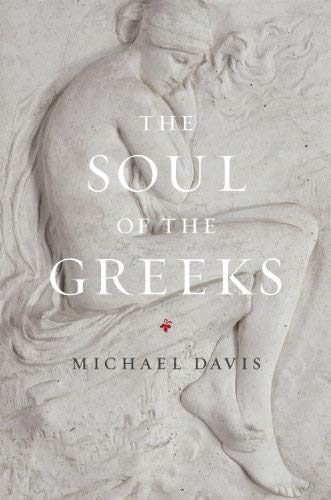
The Soul of the Greeks: An Inquiry by Michael Davis

The Soul of the Greeks: An Inquiry

Michael Davis
248 pages
University of Chicago Press
Mar 2011
Hardcover
History WSBN
0
Readers
0
Reviews
0
Discussions
0
Quotes
The understanding of the soul in the West has been profoundly shaped by Christianity, and its influence can be seen in certain assumptions often made about the soul: that, for example, if it does exist, it is separable from the body, free, immortal, and potentially pure. The ancient Greeks, however, conceived of the soul quite differently. In this ambitious new work, Michael Davis analyzes works by Homer, Herodotus, Euripides, Plato, and Aristotle to reveal how the ancient Greeks portrayed and understood what he calls "the fully human soul.". Beginning with Homer's Iliad, Davis lays out the tension within the soul of Achilles between immortality and life. He then turns to Aristotle's De Anima and Nicomachean Ethics to explore the consequences of the problem of Achilles across the whole range of the soul's activity. Moving to Herodotus and Euripides, Davis considers the former's portrayal of the two extremes of culture - one rooted in stability and tradition, the other in freedom and motion - and explores how they mark the limits of character. Davis then shows how Helen and Iphigeneia among the Taurians serve to provide dramatic examples of Herodotus's extreme cultures and their consequences for the soul. The book returns to philosophy in the final part, plumbing several Platonic dialogues - the Republic, Cleitophon, Hipparchus, Phaedrus, Euthyphro, and Symposium - to understand the soul's imperfection in relation to law, justice, tyranny, eros, the gods, and philosophy itself. Davis concludes with Plato's presentation of the soul of Socrates as self-aware and nontragic, even if it is necessarily alienated and divided against itself.. The Soul of the Greeks thus begins with the imperfect soul as it is manifested in Achilles' heroic, but tragic, longing and concludes with its nontragic and fuller philosophic expression in the soul of Socrates. But, far from being a historical survey, it is instead a brilliant meditation on what lies at the heart of being human.
Join the conversation

No discussions yet. Join BookLovers to start a discussion about this book!

No reviews yet. Join BookLovers to write the first review!

No quotes shared yet. Join BookLovers to share your favorite quotes!

Earn Points
Your voice matters. Every comment, review, and quote earns you reward points redeemable for Bitcoin.
Comment +5 pts Review +20 pts Quote +7 pts Upvote +1 pt
BookMatch Quiz
Find books similar to this one
About this book
Pages 248
Publisher University of Chicag...
Published 2011
Readers 0