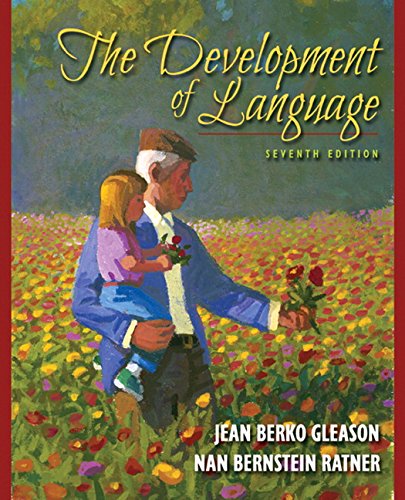
The Development of Language (7th Edition) by Jean Burko Gleason

The Development of Language (7th Edition)

Jean Burko Gleason
528 pages
Pearson
Feb 2008
7th Edition
Professional & Technical WSBN
0
Readers
0
Reviews
0
Discussions
0
Quotes
The seventh edition of The Development of Language, written and contributed by leading researchers, covers language acquisition and development from infancy through adulthood.This authoritative text is ideal for courses that take a developmental approach to language acquisition across the full life span, from infancy through the aging process. The text thoroughly explores syntax, morphology, semantics, phonology, and pragmatics. It examines atypical development with attention to the most common disorders affecting language acquisition, presents strong coverage of individual differences in language acquisition and learning, describes how and why they occur, and provides contemporary references and the most recent research findings. The panel of expert authors provides students with cutting-edge research knowledge in an interesting and highly readable format. The goal is the best and most up-to-date information for the student, with guides for further exploration of topics of interest.The emphasis on change over the life span is even more important to students from all fields, since it reinforces current developments in cognitive neuroscience that indicate language, once acquired, is not static, but rather, undergoes constant neural reorganization.HIGHLIGHTS OF WHAT'S NEW IN THE SEVENTH EDITION:Updated chapter on atypical language development (Chapter 9) contains new information about cochlear implants, current research on the autism spectrum disorders, new therapeutic approaches to atypical language, with an emphasis on Specific Language Impairment, and evaluation of recent claims regarding the etiology of atypicality. Therapeutic recommendations are presented within the context of Evidence-based Practice (EBP) . Includes contemporary topics, such as the neurological bases of animal and human communication, the value of programs to accelerate language in infants, such as "baby signs", language acquisition in languages other than English, adopted foreign children's language acquisition, and genetic basis for language, that encourage topical discussions. Updated with new material on the hypothesized brain mechanisms that underlie language acquisition, the aging brain's language processing abilities, and language disorder, as well as advances in the treatment of language disorders ensuring student awareness of current discoveries. New information on using computers and the Internet to carry out directed and student-initiated research on language development, not found in most competing texts in the subject area. Expanded information on the use of the Child Language Data Exchange System, which is now Web-based, and contains both written transcripts and auditory language samples that permit first-hand student research in the topic areas. Completely updated chapters that continue to emphasize the primary concerns of researchers and practitioners working in the areas of language acquisition and disorders.
Join the conversation

No discussions yet. Join BookLovers to start a discussion about this book!

No reviews yet. Join BookLovers to write the first review!

No quotes shared yet. Join BookLovers to share your favorite quotes!

Earn Points
Your voice matters. Every comment, review, and quote earns you reward points redeemable for Bitcoin.
Comment +5 pts Review +20 pts Quote +7 pts Upvote +1 pt
BookMatch Quiz
Find books similar to this one
About this book
Pages 528
Publisher Pearson
Published 2008
Readers 0