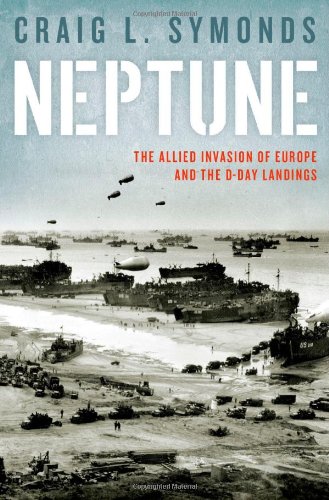
"On June 6, 1944, 160,000 Allied troops landed along 50 miles of French coastline to battle German forces on the beaches of Normandy. D-Day, as it would come to be known, would eventually lead to the liberation of Western Europe, and was a critical step in the road to victory in World War II. Yet the story begins long before the Higgins landing craft opened their doors and men spilled out onto the beaches to face a storm of German bullets. The invasion, and the victories that followed, would not have been possible without the massive naval operation that led up to it: Neptune. From the moment British forces evacuated the beaches of Dunkirk in 1940, Allied planners began to consider how, when, and where they would re-enter the European continent. Once in the war, the Americans, led by George Marshall, wanted to invade in a year's time. The British were convinced this would be a tragic mistake. Allied forces would be decimated by the Wehrmacht. When Operation Overlord -- the name given to the cross-Channel invasion of Northern France -- was finally planned, it was done so only in concert with the seaborne assault that would bring the men and equipment to the Normandy coast. Symonds traces the central thread of this Olympian event -- involving over five thousand ships and nearly half a million personnel -- from the first talks between British and American officials in the winter of 1941 to the storming of the beaches in the late spring of 1944. He considers Neptune's various components, including the strategic unity, industrial productivity, organizational execution, and cross-cultural exchange on which the Allies depended. Portraits of key American and British figures, from Franklin Roosevelt, Winston Churchill, and Eisenhower to Admiral Ernest J. King and his British counterpart, Admiral Sir Bertram Ramsay, combine with an intimate look at men up and down the chain of command. Neptune was the pinnacle of Allied organization and cooperation. From the suppressing of the U-boat menace in the Battle of the Atlantic, to the establishing of camps and training facilities near the English coast, to the gearing up of the American industrial machine to produce the ships, tanks, and tools of war that would make an invasion possible, Symonds' riveting narrative uncovers the means by which Neptune was brought to fruition, and presents the first comprehensive account of the greatest naval operation in history"--