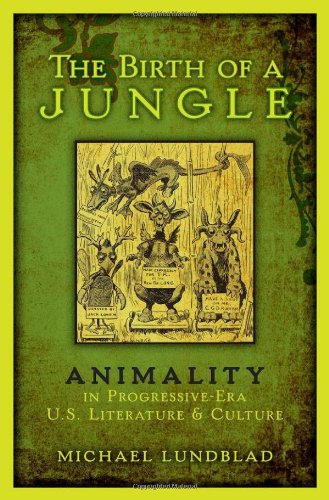
According to the law of the jungle, the behavior of wild animals can be equated with natural human instincts not only for competition and reproduction, but also for violence and exploitation. Drawing on numerous novels and cultural events at the turn of the twentieth century, The Birth of a Jungle examines how the characteristics and imagery of wild animals were evoked to explore a wide range of human behaviors, including homosexuality, labor exploitation, and the lynching of African Americans.Throughout the study, Michael Lundblad emphasizes what he terms "the discourse of the jungle": Darwinist-Freudian constructions of "the human" and "the animal" that redefined various behaviors in relation to animal instincts. With nuanced, attentive readings, Lundblad reveals how these formulations of the human animal, despite reigning critical interpretations, were often contested rather than reinforced in Progressive-Era texts.