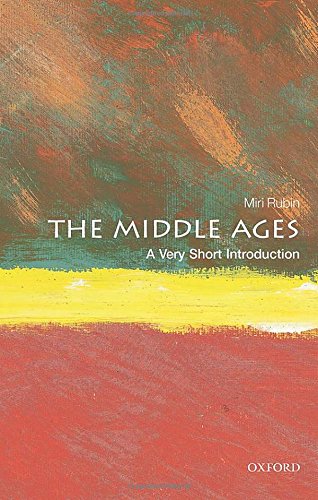

The Middle Ages: A Very Short Introduction by Miri Rubin

The Middle Ages: A Very Short Introduction

Miri Rubin
139 pages
Oxford University Press
Dec 2014
History WSBN
0
Readers
0
Reviews
0
Discussions
0
Quotes
The Middle Ages is a term coined around 1450 to describe a thousand years of European History. In this Very Short Introduction, Miri Rubin provides an exploration of the variety, change, dynamism, and sheer complexity that the period covers. From the provinces of the Roman Empire, which became Barbarian kingdoms after c.450-650, to the northern and eastern regions that became increasingly integrated into Europe, Rubin explores the emergence of a truly global system of communication, conquest, and trade by the end of the era. <br><br>Presenting an insight into the challenges of life in Europe between 500-1500 -- at all levels of society -- Rubin looks at kingship and family, agriculture and trade, groups and individuals. Conveying the variety of European experiences, while providing a sense of the communication, cooperation, and shared values of the pervasive Christian culture, Rubin looks at the legacies they left behind.<br><br>ABOUT THE SERIES: The Very Short Introductions series from Oxford University Press contains hundreds of titles in almost every subject area. These pocket-sized books are the perfect way to get ahead in a new subject quickly. Our expert authors combine facts, analysis, perspective, new ideas, and enthusiasm to make interesting and challenging topics highly readable.
Join the conversation

No discussions yet. Join BookLovers to start a discussion about this book!

No reviews yet. Join BookLovers to write the first review!

No quotes shared yet. Join BookLovers to share your favorite quotes!

Earn Points
Your voice matters. Every comment, review, and quote earns you reward points redeemable for Bitcoin.
Comment +5 pts Review +20 pts Quote +7 pts Upvote +1 pt
BookMatch Quiz
Find books similar to this one
About this book
Pages 139
Publisher Oxford University Pr...
Published 2014
Readers 0