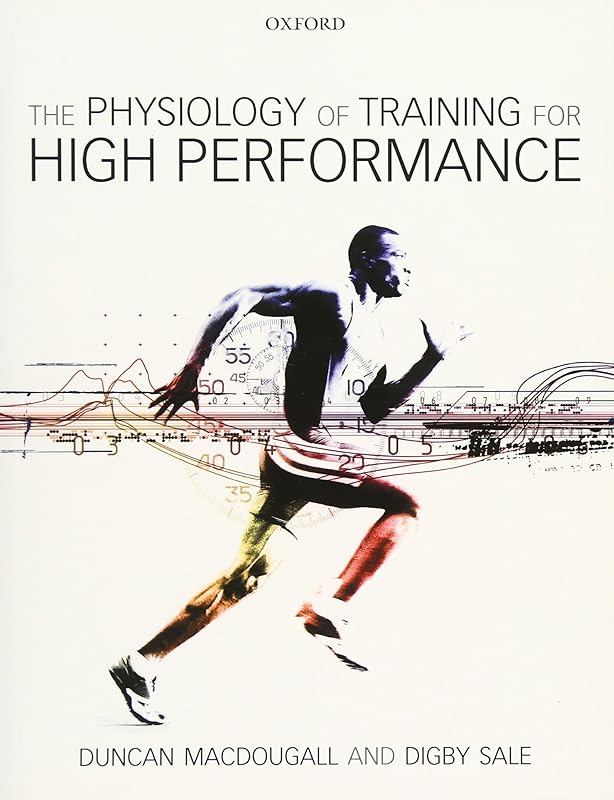
The Physiology of Training for High Performance by Duncan MacDougall

The Physiology of Training for High Performance

Duncan MacDougall
440 pages
Oxford University Press
Oct 2014
Paperback
Health, Mind & Body WSBN
0
Readers
0
Reviews
0
Discussions
0
Quotes
Success for an athlete depends on their ability to perform at their best when it matters most. Performance depends on the athlete's body having acquired the most beneficial adaptations for their sport. . But how can an athlete or coach be sure that training results in the desired adaptations? . Training can be defined as the stimulation of biological adaptations that result in an improvement in performance in a given task. Athletes and coaches have learned, mostly through trial and error, how to exploit the ability of the body to adapt in response to potentially harmful stimuli. The challenge lies in applying the right stimuli at the right intensity for the right amount of time: muscles respond to working more forcefully than normal by becoming bigger, stronger, and more resistant to damage--but over-training can lead to injury. . Underpinned by an understanding of the mechanisms behind adaptation--and thoroughly supported by scientific research--The Physiology of Training for High Performance provides the information necessary to decide on the most effective way to improve performance.. The book begins by introducing students to the concept and physiological bases of adaptation. The authors then delve into training for different outcomes, for example, improved endurance or speed, and relate the discussion to various sports and events. Finally, the authors summarize the latest research surrounding additional factors that affect an athlete's performance and potential, including tapering, nutrition, and body composition. . FEATURES. * The only text to provide a rigorous, evidence-based understanding of the physiological bases behind training for high-performance sports. * Illuminates the processes that cause and control the body's adaptive response to training. * Combines the theoretical and applied aspects of physical training to explain which stimuli are most effective in triggering particular adaptations. * Examples and Sample Programs demonstrate how to apply the concepts developed to real-world training scenarios. * Written by internationally renowned exercise scientists, each of whom is extensively published in peer-reviewed journals and books, as well as former athletes, coaches, and training consultants for Olympic and professional teams. COMPANION WEBSITEFor registered adopters of the book:- Figures from the book, available for download. For students:- Multiple-choice questions to check understanding and aid revision- Links to sources of further information
Join the conversation

No discussions yet. Join BookLovers to start a discussion about this book!

No reviews yet. Join BookLovers to write the first review!

No quotes shared yet. Join BookLovers to share your favorite quotes!

Earn Points
Your voice matters. Every comment, review, and quote earns you reward points redeemable for Bitcoin.
Comment +5 pts Review +20 pts Quote +7 pts Upvote +1 pt
BookMatch Quiz
Find books similar to this one
About this book
Pages 440
Publisher Oxford University Pr...
Published 2014
Readers 0