The Nature of Space and Time (Princeton Science Library) by by Stephen Hawking and Roger Penrose

The Nature of Space and Time (Princeton Science Library)

by Stephen Hawking and Roger Penrose
640 pages
Oxford Paperbacks
Jan 1971
Computers & Internet WSBN
3
Readers
1
Reviews
0
Discussions
0
Quotes
Amazon.com Review Some love it, some hate it, but
Join the conversation

No discussions yet. Join BookLovers to start a discussion about this book!

A nice opposite view of mainstream AI thoughts

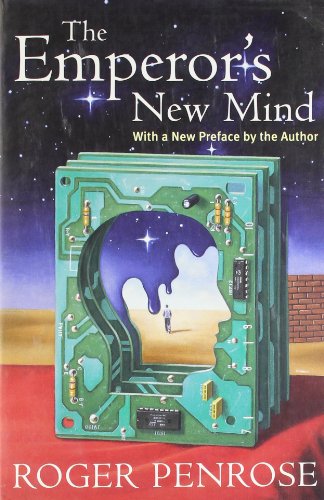
As a junior Ph.D. student who hopes to have a career in the research of artificial intelligence (machine learning or deep learning more precisely), I was reading this book as a touch on the opposite of the belief that intelligence is achievable by machines. Apart from several of his dramatic tones towards mocking A.I. (what was that story in the pro- and epi-logue about?), this book has been a very enjoyable experience for me. Roger Penrose is definitely one scientist that holds a very strong opinion on this opposite, and I do have to say that he is undoubtedly good at explaining his arguments. This book did a good job at disseminating a set of fundamental ideas from a physics perspective in relation to some very philosophical and mathematical issues. From my reading, there are two streams of ideas in the book. The first one is from mathematics, including the introduction of algorithms, Turing machines and logical proof systems. The second one is from physics, from classical mechanics to relativity and quantum mechanics and beyond. The interaction of these two streams by itself is worth reading by anyone who is pondering on the fundamental doubts of the mind, intelligence and conciousness. From the first stream, the book’s main argument rests on the Turing halting problem and Gödel’s incompleteness theorems. From these theorems, he argues that machines could not be like humans since it could not know the truthness of these self-referencing statements. I am not yet convinced by this seemingly sound argument, because it rests on the fact that there is certain statement about the system itself that it could not know true or false. We humans could perceive that these incomplete statements are true, because we are not these systems therefore they are not self-referencing statements for ourselves. We do not have an answer to whether we ourselves are free from these incomplete limitations, since if we had the answer it would violate the incompleteness theorems. Who know...

No quotes shared yet. Join BookLovers to share your favorite quotes!

Earn Points
Your voice matters. Every comment, review, and quote earns you reward points redeemable for Bitcoin.
Comment +5 pts Review +20 pts Quote +7 pts Upvote +1 pt
BookMatch Quiz
Find books similar to this one
About this book
Pages 640
Publisher Oxford Paperbacks
Published 1971
Readers 3