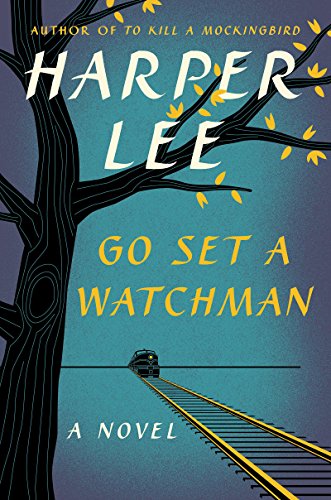
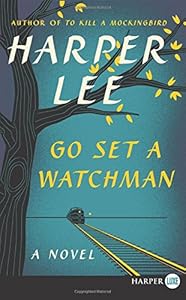
An historic literary event the publication of a newly discovered novel the earliest known work from Harper Lee the beloved bestselling author of the Pulitzer Prize-winning classic To Kill a MockingbirdOriginally written in the mid-s Go Set a Watchman was the novel Harper Lee first submitted to her publishers before To Kill a Mockingbird Assumed to have been lost the manuscript was discovered in late Go Set a Watchman features many of the characters from To Kill a Mockingbird some twenty years later Returning home to Maycomb to visit her father Jean Louise FinchScoutstruggles with issues both personal and political involving Atticus society and the small Alabama town that shaped herExploring how the characters from To Kill a Mockingbird are adjusting to the turbulent events transforming mid-s America Go Set a Watchman casts a fascinating new light on Harper Lees enduring classic Moving funny and compelling it stands as a magnificent novel in its own right.
No discussions yet. Join BookLovers to start a discussion about this book!
More complex approaches to more complex problems ...
"Every man's island, Jean Louise, every man's watchman, is his conscience. There is no such thing as a collective conscience." These words, spoken by Dr Jack Finch, brother to Atticus Finch and uncle to Jean Louise Finch, point to a central theme in Harper Lee's "Go Set a Watchman". To say the words are pivotal in the climax of the novel may be too trite as they form part of a larger exposition from Uncle Jack tying together many of the book's themes, including individuality, societal cohesion, early civil rights activism and making decisions that, despite their apparent horror and hypocrisy, may, if the gamble pays off, establish longer term benefits. Anyone who has read (or viewed) "The Help" by Kathryn Stockett, could be forgiven for assuming it was based on "Go Set a Watchman": Southern woman in her mid-twenties returns from New York where she has been experiencing northern ways. She tries to integrate herself into her old society, one in which she never felt wholly comfortable in the first place, but still had good standing as a member of her family. She ends up confronting a significant parent about racist attitudes. And this is the big story for fans of Lee's "To Kill a Mockingbird". The headlines say Atticus is revealed as racist. There is room for this interpretation, though I think it is erroneous. Instead, "Watchman" is more about exploring the methods employed in working for the ideals espoused by Atticus in "Mockingbird" and idealised by both the child Scout and the adult Jean Louise Finch: not judging a person until you've walked in their shoes, equality and justice regardless of skin colour or creed. However, the tension in "Watchman" is created by more complex issues than in "Mockingbird", despite the less complex plot. (There is no Boo Radley sub-plot here, although her romantic relationship with Henry Clinton serves to expand on the themes of identity and integration while also linking to delightful and skilfully woven vignettes from Jean Louise...
Prejudice, a dirty word, and faith, a clean one, have something in common: they both begin where reason ends.
The only thing I’m afraid of about this country is that its government will someday become so monstrous that the smallest person in it will be trampled underfoot, and then it wouldn’t be worth living in. The only thing in America that is still unique in this tired world is that a man can go as far as his brains will take him or he can go to hell if he wants to, but it won’t be that way much longer.
I should like to take your head apart, put a fact in it, and watch it go its way through the runnels of your brain until it comes out of your mouth.
Earn Points
Your voice matters. Every comment, review, and quote earns you reward points redeemable for Bitcoin.