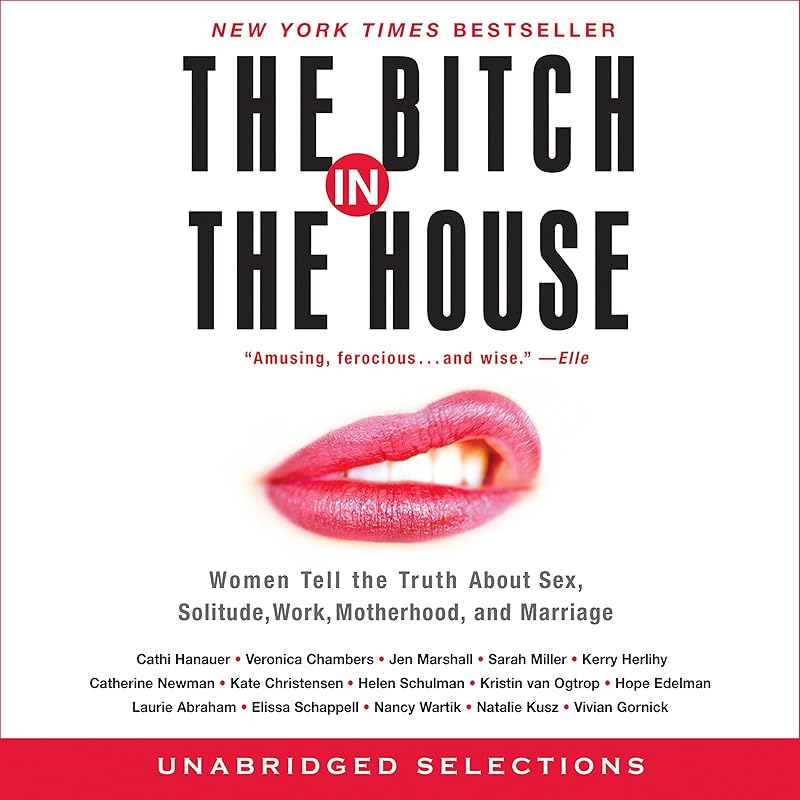
Despite more power and choices than ever before, women are still angry - that's not necessarily a bad thing, as anger is what continues to open the door for change. In this collection, 15 women speak boldly and passionately about choices they've made - about sex, children, love, and work - and explore what's working and what is not. Their essays - always provocative, honest, witty, and wise - are the culmination of the lessons of the past two decades, the "me" years and the therapy years, the years that have taught women to express themselves and acknowledge their needs. As celebratory as they are critical, these brilliant essays reflect the truth about life. The audio contains the following essays, written and read by the contributors: Introduction - Cathi Hanauer "Getting the Milk for Free" - Veronica Chambers "Crossing to Safety" - Jen Marshall "Moving In. Moving Out. Moving On." - Sarah Miller "Papa Don't Preach" - Kerry Herlihy "I Do. Not.: Why I Won't Marry" - Catherine Newman "Killing the Puritan Within" - Kate Christensen "My Mother's Ring: Caught Between Two Families" - Helen Schulman "Attila the Honey I'm Home" - Kristin van Ogtrop "The Myth of Co-Parenting: How It Was Supposed to Be. How It Was." - Hope Edelman "Daddy Dearest: What Happens When He Does More Than His Half?" - Laurie Abraham "Crossing the Line in the Sand: How Mad Can Mother Get?" - Elissa Schappell "Married at 46: The Agony and the Ecstasy" - Nancy Wartik "The Fat Lady Sings" - Natalie Kusz "What Independence Has Come to Mean to Me: The Pain of Solitude. The Pleasure of Self-Knowledge." - Vivian Gornick
No discussions yet. Join BookLovers to start a discussion about this book!
'Two people in the same circumstances, having different experiences.'
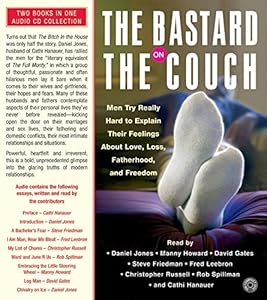
I read this book, then followed it with its bookend, 'The Bastard on the Couch'. It was a very interesting combination. This tone of 'Bitch' is dark. Lots of anger. Lots of complaint. Lots of railing from its authors at almost every turn. As with its precursor, 'Bastard' is written by accomplished writers (although admittedly there seem to be more editors on the distaff side), but the tone is...well, more playful. Less 'serious', to my eyes. And much more broad in its scope, ranging far from what I expected, having read 'Bitch' first. It made for an intriguing contrast. I felt, in retrospect, that the starting points of the books were different. And one of the 'Bastard' essays illuminates this brilliantly, bringing into play (no pun intended) what it's like for an accomplished outfielder when the ball comes off the bat, when instinct takes over, and 'the right moves' are made. The author was in awe of his partner's smooth reactions to situations that he clearly had no experience in. Now, this raises the question of 'naturalness' of child-rearing, of nuturing...*that* whole discussion. But this too is dealt with quite nicely with the supposition that if men don't have exposure to 'providing care' when they're young, and they haven't watched their 'at work' fathers doing it, where are they supposed to get their insight from? Another prickly issue raised is what women bring to the whole process of changing roles. Specifically, their own expectations, not only of their partners, but of themselves; if they're essentially deciding where the bar is placed, how egalitarian are things? Of the two books, 'Bitch' is more confrontational, more examining in its approach. It presents a near-endless litany of complaints about how things have changed in the world of child-rearing, but in the end, doesn't really provide a whole lot of solutions, save for the admission that as working mothers, what they really need are wives. 'Bastard' is the more looping, more free-range, not rea...
No quotes shared yet. Join BookLovers to share your favorite quotes!
Earn Points
Your voice matters. Every comment, review, and quote earns you reward points redeemable for Bitcoin.