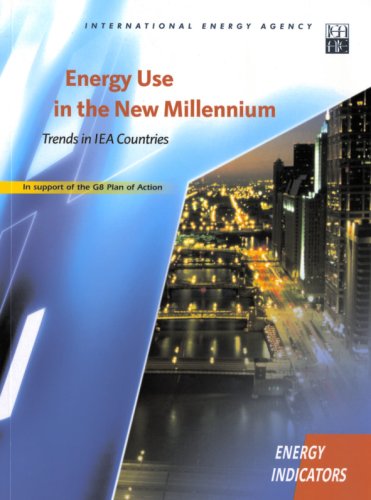
Energy Use in the New Millennium: Trends in IEA Countries by international energy agency

Energy Use in the New Millennium: Trends in IEA Countries

international energy agency
168 pages
oecd publishing
Sep 2007
Paperback
Default WSBN
0
Readers
0
Reviews
0
Discussions
0
Quotes
Responding to a Gleneagles G8 Summit reguest, this book shows how changes in energy efficiency, economic structure, income, prices and fuel mix have affected recent trends in energy use and CO2 emissions in IEA countries. The results are a wake-up call for us all. Since 1990, the rate of energy efficiency improvement in IEA countries has been less than 1% per year much lower than in previous decades and not nearly enough to stem the growth of CO 2 emissions. If we are to tackle climate change and move towards a sustainable energy future then this rate will need to double. We must and we can do better! Table of Content : Foreword Acknowledgements Executive Summary Chapter 1. Introduction Chapter 2. Overall Trends -Overview of Trends -Trends in Energy Use and CO2 Emissions -Drivers of Energy Use -Changes in Aggregate Energy Intensity -Impact of Changes in Energy Services, Structure, and Intensity -Energy and CO2 Savings -Summary Chapter 3. Manufacturing -Overview of Trends in the Manufacturing Sector -Trends in Manufacturing Energy Use and CO2 Emissions -Drivers of Energy Use in Manufacturing -Changes in Aggregate Energy Intensity -Impact of Changes in Structure and Intensity -Energy and CO2 Savings -Summary Chapter 4. Households -Overview of Trends in the Household Sector -Trends in Household Energy USE and CO2 Emissions -Drivers of Energy Use in Households -Changes in per Capita Energy Use and CO2 Emissions -Impactof Changes in Structure and Intensity -Energy and CO2 Savings -Summary Chapter 5. Services -Overview of Trends in the Services Sector -Trends in Service Energy Use -Drivers of Energy Use in the Service Sector -Changes in Aggregate Energy Intensity -Impact of Changes in Output and Intensity -Energy and CO2 Savings -Summary Chapter 6. Passenger Transport - Overview of Trends in Passenger Transport -Trends in Passenger Transport Energy use and CO2 Emissions -Drivers of Energy Use in Passenger Transport -Changes in Aggregate Energy Intensity -Impact of Changes in Structure and Intensity -Energy and CO2 Savings -Summary Chapter 7. Freight Transport -Overview of Trends in Freight Transport -Trends in Freight Transport Energy Use and CO2 Emissions -Drivers of Energy Use in Freight Transport -Changes in Aggregate Energy Intensity -Impact of Changes in Structure and Intensity -Energy and CO2 Savings -Summary Chapter 8. Conclusions and Policy Implications -Trends in Energy Use and CO2 Emissions -Implication for Energy Efficiency Policy -The Role of Indicators in Policy Development and Evaluation Annex A. Methodology and Data Sources Annex B. Selected Indicators Using GDP and Value-Added at Market Exchange Rates Annex C. Long-Term Trends Annex D. Applications of Energy Indicators in IEA Countries Anenx E. Abbreviations and Glossary Annex F. References and Further Reading
Join the conversation

No discussions yet. Join BookLovers to start a discussion about this book!

No reviews yet. Join BookLovers to write the first review!

No quotes shared yet. Join BookLovers to share your favorite quotes!

Earn Points
Your voice matters. Every comment, review, and quote earns you reward points redeemable for Bitcoin.
Comment +5 pts Review +20 pts Quote +7 pts Upvote +1 pt
BookMatch Quiz
Find books similar to this one
About this book
Pages 168
Publisher oecd publishing
Published 2007
Readers 0