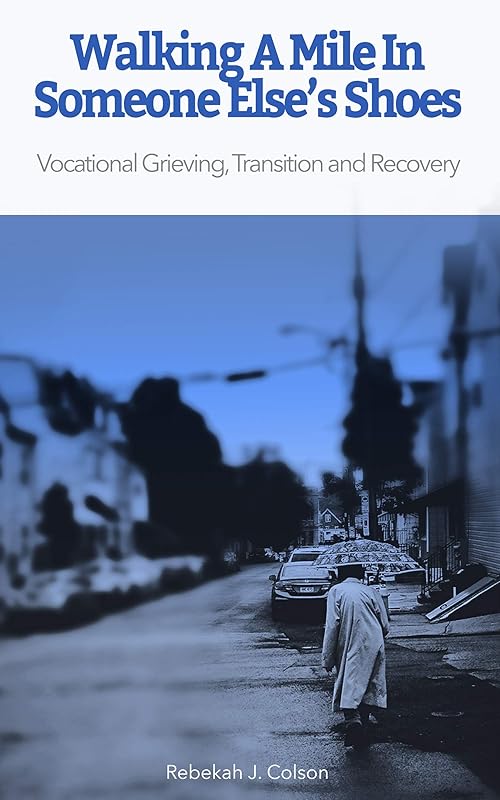
Walking A Mile In Someone Else's Shoes: Vocational Grieving, Transition and Recovery by Rebekah J. Colson

Walking A Mile In Someone Else's Shoes: Vocational Grieving, Transition and Recovery

Rebekah J. Colson
184 pages
Jan 2018
Hardcover
Self-Help WSBN
0
Readers
0
Reviews
0
Discussions
0
Quotes
Walking a Mile in Someone Else's Shoes: Stories of Vocational Grieving, Transition and Recovery is a contemporary, anecdotal examination of the process of setting aside one vocational identity, and taking on another. It centers on the grieving and loss experienced when people lose jobs that they love, or the relief that they feel when leaving jobs that are burdensome. Included in these interviews are 48 people of different racial, class, gender, employment and educational backgrounds. It is important for the reader to hear the different struggles (and triumphs) of people who are like oneself, but also dissimilar, in order to help illustrate how money, gender, culture, and family structure factor into coping in the midst of vocational grieving. The interview subjects are working-class employees, white collar professionals, small business owners, military veterans, university professors and stay at home parents. Theoretical models and psychological theories are presented, including Elizabeth Kubler-Ross's "The Five Stages of Grief" and John M. Fisher's "Personal Transition Curve." Also examined are theories developed by B.F. Skinner, a famous American psychologist, behaviorist and inventor who was a Professor of Psychology at Harvard. Skinner's theories of behavior, including his theory of operant conditioning, have strongly influenced the fields of psychology, psychiatry, and counseling. Also included are aspects contained within "Psychology Applied to Modern Life" (Weiten et al) regarding four major types of coping skills: appraisal-focused, problem-focused, emotion-focused and meaning-focused. The most compelling aspect of Walking a Mile is the anecdotal evidence presented through the subjects' eyes. This concept of job transitions and grieving employment identity (friends, peers, projects, comfort level, etc.) is something that everyone experiences in his or her lifetime. Whether the change occurs willingly or outside of personal control, within or without the same company, a person's coping skills (their "tool belt") , their background, their support system and their personality all come into play when examining whether a transition becomes a negative or positive experience. Sometimes the most jarring transitions are those that were chosen by a person, but feel awkward and even involve regret at first glance.
Join the conversation

No discussions yet. Join BookLovers to start a discussion about this book!

No reviews yet. Join BookLovers to write the first review!

No quotes shared yet. Join BookLovers to share your favorite quotes!

Earn Points
Your voice matters. Every comment, review, and quote earns you reward points redeemable for Bitcoin.
Comment +5 pts Review +20 pts Quote +7 pts Upvote +1 pt
BookMatch Quiz
Find books similar to this one
About this book
Pages 184
Published 2018
Readers 0