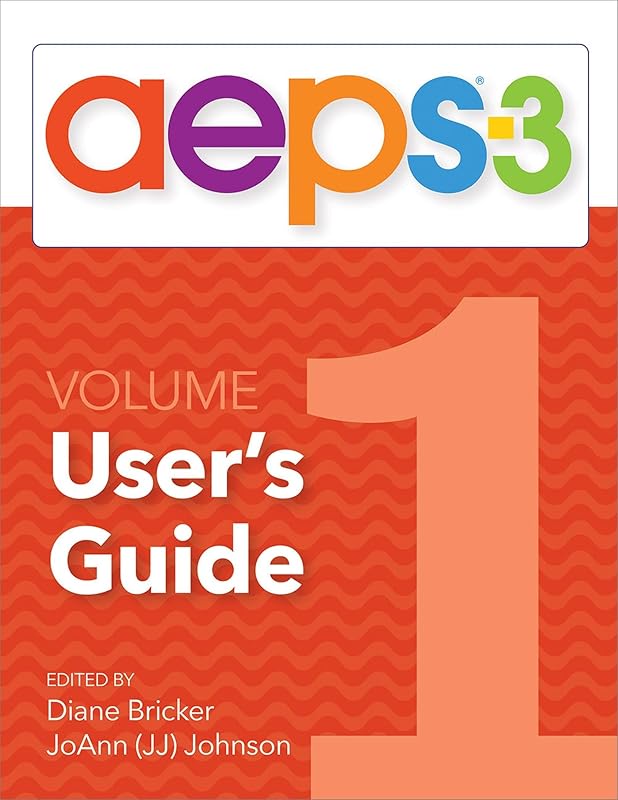
AEPS®-3 User's Guide (Volume 1) (Aeps-3, 1) by Diane Bricker Ph.D.

AEPS®-3 User's Guide (Volume 1) (Aeps-3, 1)

Diane Bricker Ph.D.
120 pages
Brookes Publishing
Nov 2021
Paperback
Health, Mind & Body WSBN
0
Readers
0
Reviews
0
Discussions
0
Quotes
Comprehensive and reader‐friendly, this User's Guide gives early childhood professionals the practical knowledge they need to use the Assessment, Evaluation, and Programming System for Infants and Children, Third Edition (AEPS®‐3) accurately and effectively.In this volume, professionals will find a complete overview of the AEPS‐3 linked system approachan introduction to each AEPS‐3 component and how they work togetherclear and detailed guidelines on using AEPS‐3 for assessment, goal/outcome development, teaching/intervention, and progress monitoringstrategies for encouraging family engagement and fostering team collaborationguidance on using AEPS‐3 to work with children and families who have diverse needsa summary of the research behind AEPS-3, including data on the utility, validity, and reliability of the AEPS‐3 TestSave when you purchase the AEPS-3 Complete Kit!The fully redesigned AEPSi online management system is now available! Join a demo.ABOUT AEPS‐3Streamlined and enhanced with user‐requested updates, the new AEPS‐3 gives your early childhood program the most accurate, useful child data and a proven way to turn data into action across everything you do, from goal setting to teaching to progress monitoring. Use this highly effective and efficient linked system to assess, develop goals, implement instruction/intervention, and monitor progress of every child you work with, from the first months of life through kindergarten.AEPS‐3 HELPS YOU:Collect essential assessment data and use it across your key tasks: OSEP reporting, determining eligibility, building IFSPs and IEPs, planning teaching and intervention, monitoring progress, and sharing results with familiesTrack and support emerging skills, where real growth and development happensLink assessment data to a tiered curriculum for designing teaching and intervention strategies that get resultsPick up small increments of progress - important when demonstrating growth for children with disabilitiesActively involve families, with handouts to support communication and family engagement, forms to collect information about child skills, and reports to share results and progressStrengthen school readiness for every young child by checking and supporting core skills across all areas of child development, including pre‐academic and social‐emotional skillsThere's never been a more effective or efficient system for assessing, tracking, and nurturing the development of every child you work with, from the first months of life through kindergarten. Learn more about AEPS‐3.
Join the conversation

No discussions yet. Join BookLovers to start a discussion about this book!

No reviews yet. Join BookLovers to write the first review!

No quotes shared yet. Join BookLovers to share your favorite quotes!

Earn Points
Your voice matters. Every comment, review, and quote earns you reward points redeemable for Bitcoin.
Comment +5 pts Review +20 pts Quote +7 pts Upvote +1 pt
BookMatch Quiz
Find books similar to this one
About this book
Pages 120
Publisher Brookes Publishing
Published 2021
Readers 0